
Underbrush & Brush Clearing in Shallotte, NC
A lot of clearing around Shallotte isn't about taking down the woods. It's thinning the underbrush beneath the pines and oaks, opening up a lot that's sat for years, cutting back a fence line, or cleaning up after a storm. Here's how each gets done, what grows back, what to do with the brush when burning is this tightly limited, and the town rules that reach even small jobs.
Underbrush under a canopy
Clearing under standing trees keeps the shade and the look of a wooded lot and takes out what you can't walk through: vines, saplings, briars, and shrubby growth. A compact track loader with a mulching head does most of it; hand crews with saws work the tight spots near the house and around keepers. Ask the operator to stay off the root zones of the trees you're keeping, especially the big oaks.
Overgrown lots
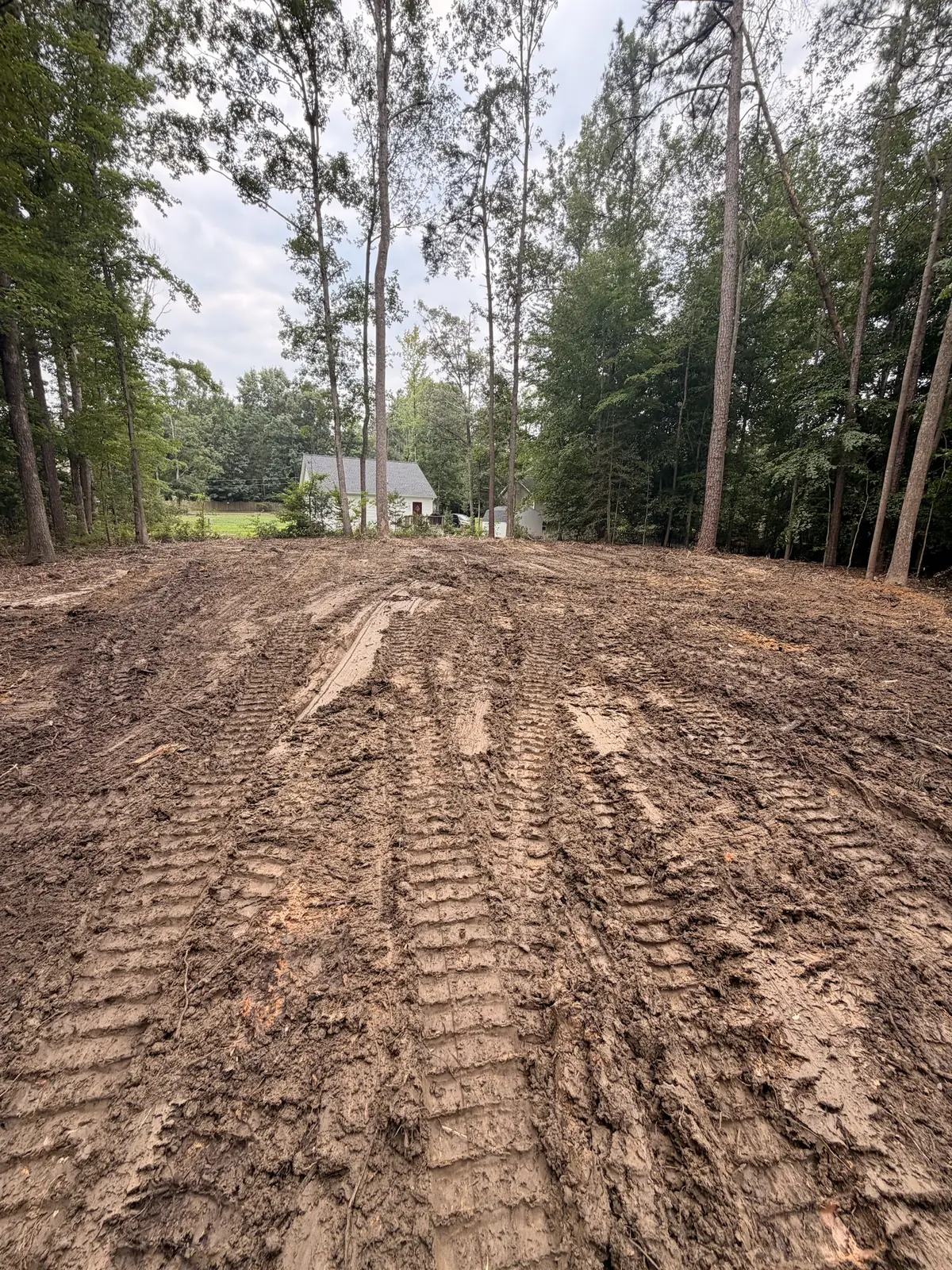
Lots bought years ago and left alone grow shut in a few seasons. Clearing one is usually a mulching job unless you're about to build, in which case it's a house site clearing job. Some towns expect lots to be kept up: Ocean Isle Beach's code names kudzu, smilax, vitex, and poison ivy as noxious vegetation and treats growth over 12 inches on a lot as a possible nuisance.
Fence lines and property lines
Have the corners found before anyone clears a line; a few hundred feet cleared on the wrong side is a neighbor problem. A mulcher can open a lane wide enough for a fence or a survey crew in one pass. In Carolina Shores, every tree removal needs a town permit, so check before cutting even along the line.
Invasive plants
The NC Forest Service warns that invasives are "particularly good at invading disturbed sites," which is exactly what a newly cleared lot is. Its list includes:
- Trees: Chinese tallowtree, tree of heaven, mimosa, and Callery pear.
- Vines: kudzu, Chinese and Japanese wisteria, Japanese honeysuckle, English ivy, and oriental bittersweet.
- Shrubs: autumn olive, bicolor lespedeza, and multiflora rose.
Mulching knocks them back but doesn't kill them, so plan a follow-up. Anyone applying pesticides for pay on your land needs a North Carolina pesticide license.
Bush hogging, mulching, or hand clearing?
| Method | Best for | Leaves |
|---|---|---|
| Bush hogging (rotary mowing) | Grass, weeds, and small saplings on open ground | Mowed stubble; woody stems resprout fast |
| Forestry mulching | Brush and trees up to roughly 6 to 8 inches across | A mulch layer, with stumps cut low |
| Hand clearing with saws | Tight spots, near the house, near the marsh, around keepers | Brush to chip, haul, or pile |
| Excavator or dozer | Stumps, roots, and anywhere you'll build | Bare ground and debris to deal with |
Storm-downed trees
After a hurricane or a hard blow, the work is downed and leaning trees, root balls, and broken tops. Some basics:
- Stay clear of anything touching a power line and call the utility.
- Trees under tension or leaning on a house are a job for a tree service with the right rigging, not a mulcher.
- Once the hazards are down, a mulcher or a grapple machine can clear the rest.
- The state air rule gives storm debris its own path: vegetative debris from a hurricane, tornado, or flood can be burned with permission from DEQ's regional air quality supervisor, under the same conditions as land-clearing fires.
- Don't count on curbside pickup right away. Brunswick County's disaster debris page says the county "may choose to activate its disaster debris removal contracts" after a severe storm, and that "these contracts are not activated immediately after a storm." After Hurricane Isaias in 2020, WECT reported that the county ran one round of vegetative debris collection in unincorporated areas, including private roads and gated communities. When pickup is approved, the instructions and schedule come with the announcement; check before paying to haul.
What to do with the brush
- Mulch it in place. Nothing to move or burn.
- Chip it and use the chips on paths and beds.
- Haul it. Costs the most, but leaves the lot clean. The county landfill in Bolivia accepts land-clearing debris from Brunswick County only; its fee page lists yard debris 4 feet or shorter at $22.50 a ton and logs longer than 4 feet at $45 a ton, and doesn't mention stumps, so ask before you load them.
- Burn it, carefully. Yard waste from a home can be burned only where no public pickup is available (DEQ says a paid private service doesn't count as public pickup), with no trash or treated wood, starting no earlier than 8 a.m. Outside town limits, Brunswick requires an NC Forest Service permit for a burn more than 100 feet from an occupied dwelling. Since June 2026 the county has also banned all burning within 100 feet of any structure in its unincorporated areas; check whether that ban is still on. The burn guide covers it.
What brush clearing costs
Brush jobs are often priced by the hour or the day, with a minimum. Mint Condition Land Management, which serves the Hampstead and Surf City area, lists brush mowing "Starting at $1,200/acre" and forestry mulching from $1,600 an acre. National cost guides put mulching anywhere from $400 to $2,500 an acre depending on density. More on cost.
Brush clearing questions
Will a contractor take a small job?
Many contractors will, with a minimum charge, because hauling a machine to your lot costs the same for two hours as for a day. Say it's small when you ask.
How soon will it grow back?
Grass and vines can be back the same season. Hardwoods like sweetgum resprout from roots and stumps. Plan on mowing or spot treatment the first year or two.
Do I need a permit to clear brush?
Often not for brush alone away from the water, but Carolina Shores requires a permit for any tree removal, and Calabash lists lot clearing among work that needs a permit. Near the marsh, ask the CAMA permit officer first.
Can a contractor clear around my trees without hurting them?
Yes, if the trees are flagged and the operator knows how close to work. Keep machines off the root zone of big trees.
How we help
Got a lot that's grown up in brush and vines, or trees down after a storm? Call, or send a short request telling us where it is, roughly how big it is, and what's taken over. We'll pass it to one independent contractor who works in southern Brunswick County, who walks the lot and quotes the work. Hiring them is your call, and you pay nothing for the referral.
Want a local contractor to walk your land?
Call or send a short request. There's no charge for the referral.