
Clearing Marsh-Side & Waterfront Lots in Shallotte, NC
Lots along the Shallotte River, the marsh creeks, and the Intracoastal Waterway are where clearing rules get tightest. Brunswick is one of North Carolina's 20 coastal counties under the Coastal Area Management Act (CAMA), so land within 75 feet of the marsh or estuarine shoreline is an Area of Environmental Concern. Here's what that means for clearing a view, a path to the water, or a house site, who issues the permits in each town, and the other buffers that can apply.
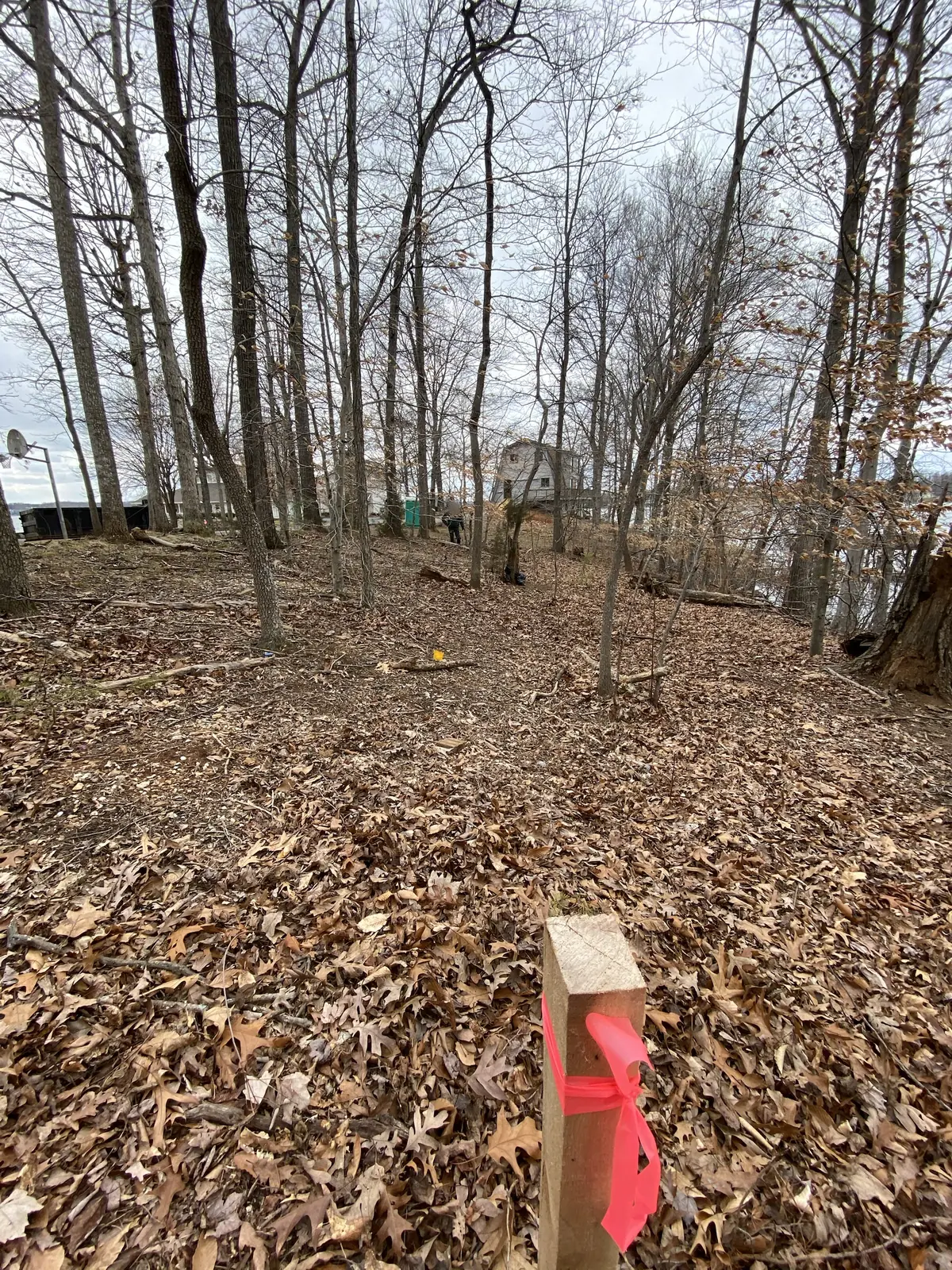
Is your lot in an Area of Environmental Concern?
CAMA permits are tied to Areas of Environmental Concern, or AECs. Brunswick is a CAMA county, and the AECs that matter most for clearing are:
- Coastal wetlands: salt marsh and other marsh subject to regular or occasional flooding by tides, including wind tides. A house or parking area in the marsh itself isn't an acceptable use.
- Estuarine shoreline: the 75 feet landward of normal high water along estuarine waters. Next to waters classified as Outstanding Resource Waters, it reaches 575 feet.
- Public trust shoreline: 30 feet landward of normal high water or normal water level along certain inland waters.
- Ocean hazard areas: on oceanfront lots, including the Ocean Erodible Area, which reaches 180 feet or more back from the vegetation line. Projects there also need an AEC Hazard Notice.
The local permit officer can tell you where those lines fall on your lot.
When clearing needs a CAMA permit
Under the statute, "development" includes "clearing or alteration of land as an adjunct of construction," along with excavation, filling, and building. So clearing that's part of building a house, a drive, or access to a dock or bulkhead inside an AEC needs a CAMA permit along with every other permit. DCM's minor permit instructions tell applicants to list "all land clearing, demolition, construction, and landscaping activities."
Clearing with no construction planned is less clear. The statute ties clearing to construction, and it excludes planting, growing, or harvesting crops and trees unless excavation or filling affects estuarine or navigable waters. Whether thinning brush for a view needs a permit isn't spelled out, so ask the permit officer before you cut, and get the answer in writing.
The 30-foot buffer
Inside the coastal shoreline AECs, new development has to sit at least 30 feet landward of normal high water or normal water level. The rule lists what can go in those 30 feet anyway, including:
- Water-dependent uses, such as piers.
- Elevated, slatted boardwalks 6 feet wide or less.
- Slatted, unroofed, elevated decks up to 200 square feet.
- Post- or pile-supported fences.
- "Grading, excavation and landscaping with no wetland fill," as long as it doesn't add runoff.
The same rule caps impervious surfaces at 30 percent of the AEC part of the lot and requires preserving natural erosion barriers such as peat marsh and "cypress-gum protective fringe areas." Where more than an acre is uncovered in the AEC, ground cover has to go down within 30 working days of finishing grading.
The single-family exemption
There's a practical way through for many house lots. In the coastal shoreline AEC, a single-family house set more than 40 feet landward of normal high water is exempt from the CAMA permit when the project involves "no land disturbing activity within the 40 feet buffer area." Clearing and grading count. You have to notify the local permit officer or DCM before starting work under the exemption. If you want to use it, plan the clearing so nothing happens in the first 40 feet.
Who issues CAMA permits in each town
| Where | Who handles CAMA permits | Phone |
|---|---|---|
| Shallotte | No town permit officer; DCM's Wilmington office issues permits | 910-796-7215 |
| Unincorporated Brunswick County | The county's local permit officer | 910-253-2034 or 800-621-0609 |
| Ocean Isle Beach | Town permit officers | 910-579-3469 |
| Holden Beach | Town permit officers | 910-842-6080 |
| Calabash | Town permit officer | 910-579-0500 |
| Sunset Beach | DCM's list says its Wilmington office handles permits; start with the town's building inspector | 910-579-6297 |
| Carolina Shores and Varnamtown | Not named on DCM's list; the county lists Varnamtown under the county | 910-796-7215 (DCM Wilmington) |
Sources: DCM's local permit officer list and Brunswick County's municipal jurisdiction table, October 2026. The two disagree for Sunset Beach and Carolina Shores, so confirm before you apply. A minor permit costs $119, and the law gives 25 days for review, which can be extended another 25. Bigger projects, such as those over 20 acres or needing other state or federal approvals, are major permits handled through DCM's Wilmington office.
Other buffers near the water
- Coastal stormwater. When the state's coastal stormwater rule applies, for example on a project that needs an erosion control plan, new development keeps a vegetated setback at least 50 feet wide from streams and perennial waterbodies.
- County and Shallotte stormwater. Disturbing anything within 30 feet of a natural stream or water body triggers Brunswick County's stormwater permit for residential work, and Shallotte's own permit inside the town.
- Lockwood Folly watershed. In the county's Lockwood Folly water quality overlay, which covers unincorporated land within 575 feet of mean high water on parcels of an acre or more, the county requires an erosion control plan, a buffer of at least 30 feet from any wetland or water line, and no more than 25 percent built-upon area.
- Holden Beach. The town says all work in or over the water, or within 75 feet of it, needs written authorization.
- The Corps. Filling or excavating in marsh or other wetlands needs federal approval from the Army Corps of Engineers, and usually a state water quality certification.
Clearing for a view
On most marsh lots the goal is a view and a path, not bare ground. That's also the easiest kind of work to keep small:
- Thin the understory and limb up rather than taking whole trees.
- Hand work with saws near the marsh edge, machines farther back.
- A narrow path, not a lane.
- Leave the marsh grass alone. It's coastal wetland.
- On the beach side, Ocean Isle Beach makes it unlawful to "introduce, plant or maintain beach vitex," an invasive dune plant, so if it's on your lot there, it has to go.
Before any of it, call the permit officer. A short call is cheaper than undoing work.
Waterfront lot questions
Can I clear down to the marsh for a view?
Not freely. Within 75 feet of the marsh or estuarine shoreline you're in an AEC, and clearing tied to building needs a CAMA permit. Thinning for a view may be possible; ask the permit officer first.
Do I need a CAMA permit to build on a marsh lot?
Usually a minor permit, unless the house sits more than 40 feet from normal high water and nothing is disturbed within those 40 feet. Then it can be exempt, after you notify the permit officer.
What about a bulkhead or dock?
Those are water-dependent structures with their own CAMA permits. The clearing to reach them is part of the same project.
How long does a minor permit take?
The law allows 25 days for review, and that can be extended another 25 days.
How we help
Call or send a short request saying where the lot is, about how big it is, and how far it sits from the marsh or open water, plus whether you're after a view, a path, or a house site. One independent contractor who works in southern Brunswick County receives it, walks the land, and gives you a quote. Whether to go ahead is up to you, and the referral is free.
Want a local contractor to walk your land?
Call or send a short request. There's no charge for the referral.