
Clearing a Lot for a House in Shallotte, NC
Clearing a wooded lot for a new house around Shallotte is mostly a question of order. The septic site gets evaluated before the machines arrive, the town or county decides whether clearing needs its own sign-off, the marsh and flood lines get checked, and only then does anyone grub stumps. Brunswick County calls itself the fastest-growing county in North Carolina, and Census estimates back that up, so lots are being cleared all around you. Here's the sequence, the rules that apply in southern Brunswick County, and what to protect before a machine shows up.
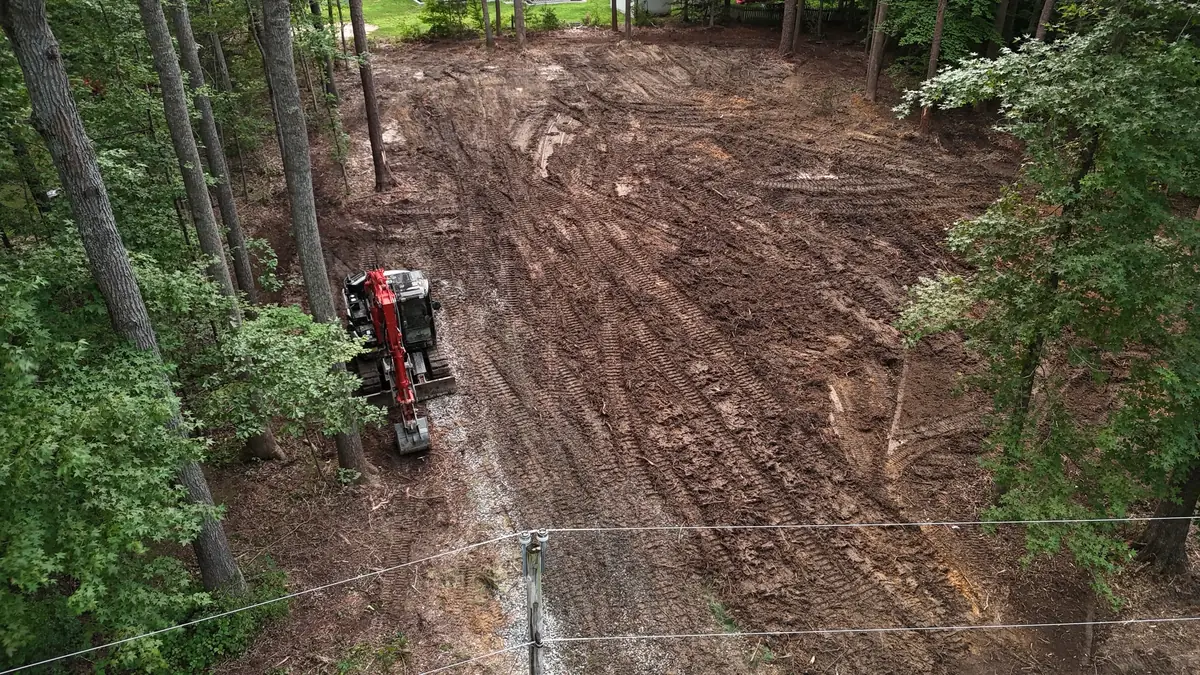
The order that saves money
- Find the lines. Have the corners located or a survey done, and stake the house, drive, and well or water line. Clearing past a property line is an expensive mistake.
- Septic or sewer? Find out whether the lot can connect to public sewer. If not, the septic site comes first; see below.
- Check the water and the flood map. Within 75 feet of the marsh or estuarine shoreline, CAMA applies. In a mapped flood zone, filling and grading need a floodplain development permit.
- Get the town or county sign-off. Shallotte requires a certificate of zoning compliance for land clearing before development, and other towns have their own rules. See the permits guide.
- Erosion control. Silt fence and a stone entrance go in before grading, and a state plan is needed if more than an acre will be disturbed.
- Clear, grub, and decide on debris. Mulch, grind, haul, or burn under permit.
- Rough grade the pad and drive, then cover bare ground quickly.
Septic first
If the lot won't be on sewer, Brunswick County Environmental Health issues the septic permits (910-253-2150). Under the state's septic rules, the Improvement Permit comes first, then the Construction Authorization, and only then the building permit. The county also describes other routes, including hiring a private soil scientist for the evaluation or an Engineer Option Permit.
Two state rules make the order matter. Soil disturbance or compaction "shall not occur over the initial and repair dispersal field area," and a permit can be suspended or revoked when "the site is altered and the permitted system cannot be installed." A dozer pass over the best soil on a lot can cost you the permit. The county's page doesn't say how much clearing an evaluation needs, so ask Environmental Health what access the soil evaluation requires before you clear more than a path.
Good septic soil is scarce here. Brunswick County's 2022 Blueprint Brunswick study found that 33 of the county's 38 soil series have severe limitations for septic systems, and the only two series suited to conventional systems cover about 5 percent of the county, mostly along US-17. Keeping machines off the spot the evaluator picks is cheap insurance.
If sewer is an option: Brunswick County's 2025–2026 wastewater report says it provides retail sewer in Calabash, Carolina Shores, Sunset Beach, Varnamtown, and unincorporated areas of the county, and treats sewage wholesale for Shallotte, Ocean Isle Beach, and Holden Beach. Whether your lot can connect is a question for the utility that serves it.
Can the whole lot be cleared?
Not always, and not everywhere:
- Unincorporated Brunswick County. The county's Unified Development Ordinance says properties "shall not be clear-cut prior to undertaking development activities," and where a required street-yard buffer isn't kept, applications can be denied for up to five years from the date of clearing. One- and two-family homes are exempt from the county's landscaping and buffer requirements, but ask county Planning how the clear-cut rule reads on your lot before you cut it all.
- Shallotte. The town's UDO says "Land clearing activities performed prior to development shall require a certificate of zoning compliance," and clearing more than 25 acres for development has to be phased. That rule sits in a tree-protection article written mainly for development that needs site plan approval and for non-residential building, so ask Town Hall (910-754-4032) how it applies to a single house.
- Sunset Beach. The town's ordinance requires a Tree Clearing Certificate before undeveloped land is cleared and keeps clearing out of perimeter buffer strips. See the town's tree page or call (910) 579-6297.
- Carolina Shores. "All tree removal shall require a permit," per town code, and a clearing, fill, and grade permit comes before any land disturbance. Call 910-575-4877.
- Calabash. The town lists lot clearing and tree removal among the work that needs a permit and says to call before starting when in doubt (910-579-0500).
- Ocean Isle Beach and Holden Beach. Ocean Isle Beach says all development in town needs authorization from its Planning and Inspections Department (910-579-3469). Holden Beach requires written authorization for all work within 75 feet of the water (910-842-6080).
- Your HOA. Many subdivisions have their own clearing and tree rules on top of the town's. Check before you sign a clearing contract.
Erosion control and stormwater
North Carolina requires an approved erosion and sedimentation control plan before disturbing more than one acre, filed at least 30 days ahead. DEQ's list of local programs names none in Brunswick County, so plans go to DEQ's Wilmington Regional Office (910-796-7215). The state fee is $119 per disturbed acre, rounded up. Ocean Isle Beach's own code also calls for a town-approved plan above one acre.
Below an acre, no plan is required, but the law still requires erosion control. DEQ's FAQ says erosion and sedimentation control "are required regardless of the size of the disturbance," and exposed slopes need ground cover within 21 calendar days of finishing a phase of grading.
Brunswick County's stormwater permit, which covers the unincorporated county, starts sooner for houses: residential work that disturbs more than an acre, that changes the ground's elevation by more than four inches through grading or fill, or that disturbs anything within 30 feet of a natural stream or water body. The county's fee schedule lists $50 for a single-family home under an acre when a permit is needed. Shallotte runs its own stormwater permit, which also starts at any disturbance within 30 feet of a stream. Ask your builder who is pulling these.
Wet ground, Carolina bays, and wetlands
Soggy isn't the same as a regulated wetland, but on a low lot, settle the question before clearing. Wet ground is common here: the same county study puts hydric soils, the kind that form under wet conditions, on about 54.5 percent of Brunswick County. Filling wetlands is regulated by the U.S. Army Corps of Engineers, whose Wilmington District covers Brunswick County ((704) 510-1441), and North Carolina's water quality office advises getting the Corps' confirmation of jurisdiction first. The state dropped its own permit for isolated wetlands in 2023, but federal rules still apply wherever the Corps has jurisdiction.
For the clearing itself, wet ground means tracked machines, working in a dry spell, and keeping ruts out of the drive. A contractor who walks it can tell you whether it can be worked now or should wait.
Flood zones
In a mapped Special Flood Hazard Area, Brunswick County requires a Floodplain Development Permit before "any development activities," and its definition of development includes filling, grading, and excavation. Code Administration handles it (910-253-2021). Whether cutting trees alone, with no grading or fill, needs one isn't spelled out, so ask. The county's jurisdiction table shows Ocean Isle Beach, Sunset Beach, Calabash, Carolina Shores, and Holden Beach handling their own flood permits. It lists Shallotte under the county, but Shallotte's own ordinance names a town floodplain administrator, so ask Town Hall too.
What to protect before the machines arrive
- The septic site and repair area, once laid out. Rope them off.
- Keeper trees, with the root zone flagged well past the trunk.
- Neighbors' trees and fences along the line.
- Underground utilities. NC 811 must be notified at least three full working days before digging: call 811 or 1-800-632-4949. Private lines, like a well line or power to a shed, aren't marked.
- The ditch and culvert at the road, where the construction entrance goes.
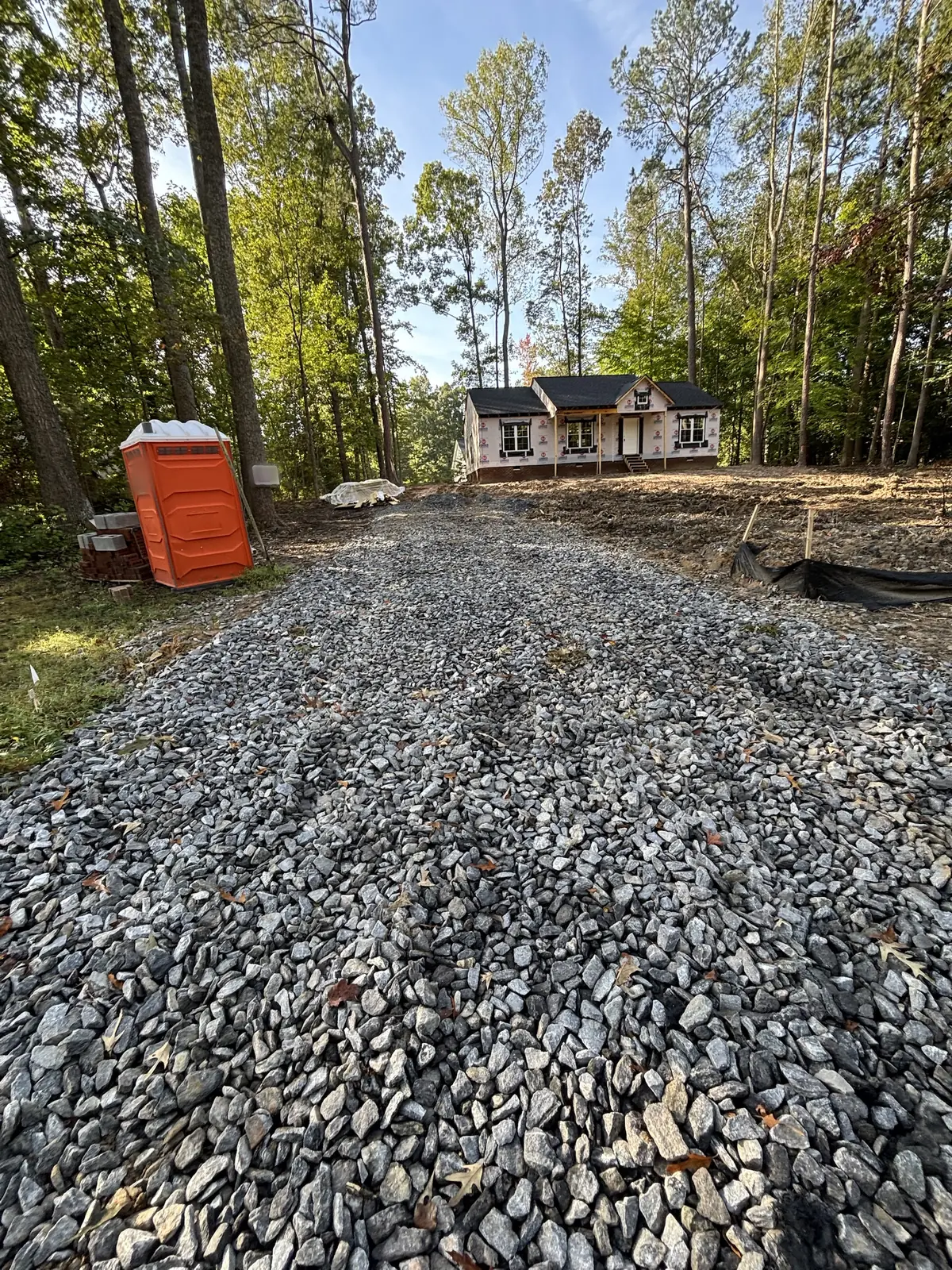
Debris
Mulching and grinding leave the material on site. Hauling costs more but leaves nothing behind. Burning takes the most rules: outside town limits, an NC Forest Service permit; 500 feet from neighbors' occupied buildings unless they sign waivers; plant material only; and no burning on Code Orange air-quality days. The burn guide has the details.
What house-site clearing costs
The price depends on density, how much gets grubbed, wet ground, and where the debris goes. The cost guide has published figures with dates, including two coastal North Carolina contractors' price pages.
House site questions
How much of the lot should I clear?
Only what the house, drive, septic area, and a working margin need, plus whatever the town or HOA allows beyond that. Trees left standing are shade and screening you can't buy back.
Should I clear before the perc test?
Ask Brunswick County Environmental Health first. Clearing too much, or running heavy equipment over the best soil, can hurt the evaluation, and state rules don't allow disturbing the permitted drainfield and repair area.
Does the builder handle clearing?
Often the builder hires it out, but not always. If you're hiring it yourself, make sure the clearing plan matches the builder's site plan and the septic permit.
Can I clear it myself?
On your own land, yes, but the same erosion, CAMA, tree, and burning rules apply to you as to a contractor. NC 811's notice exemption covers the owner of a single-family lot digging on their own land, not a contractor you hire.
How we help
Planning a house site? Call or send a short request with the lot's location, its rough size, and what's growing on it, and mention whether it's close to the marsh, sits low and wet, or already has a septic permit. One independent contractor who works in southern Brunswick County gets the request, walks the lot, and gives you a quote. It's your decision from there, and the referral costs nothing.
Want a local contractor to walk your land?
Call or send a short request. There's no charge for the referral.